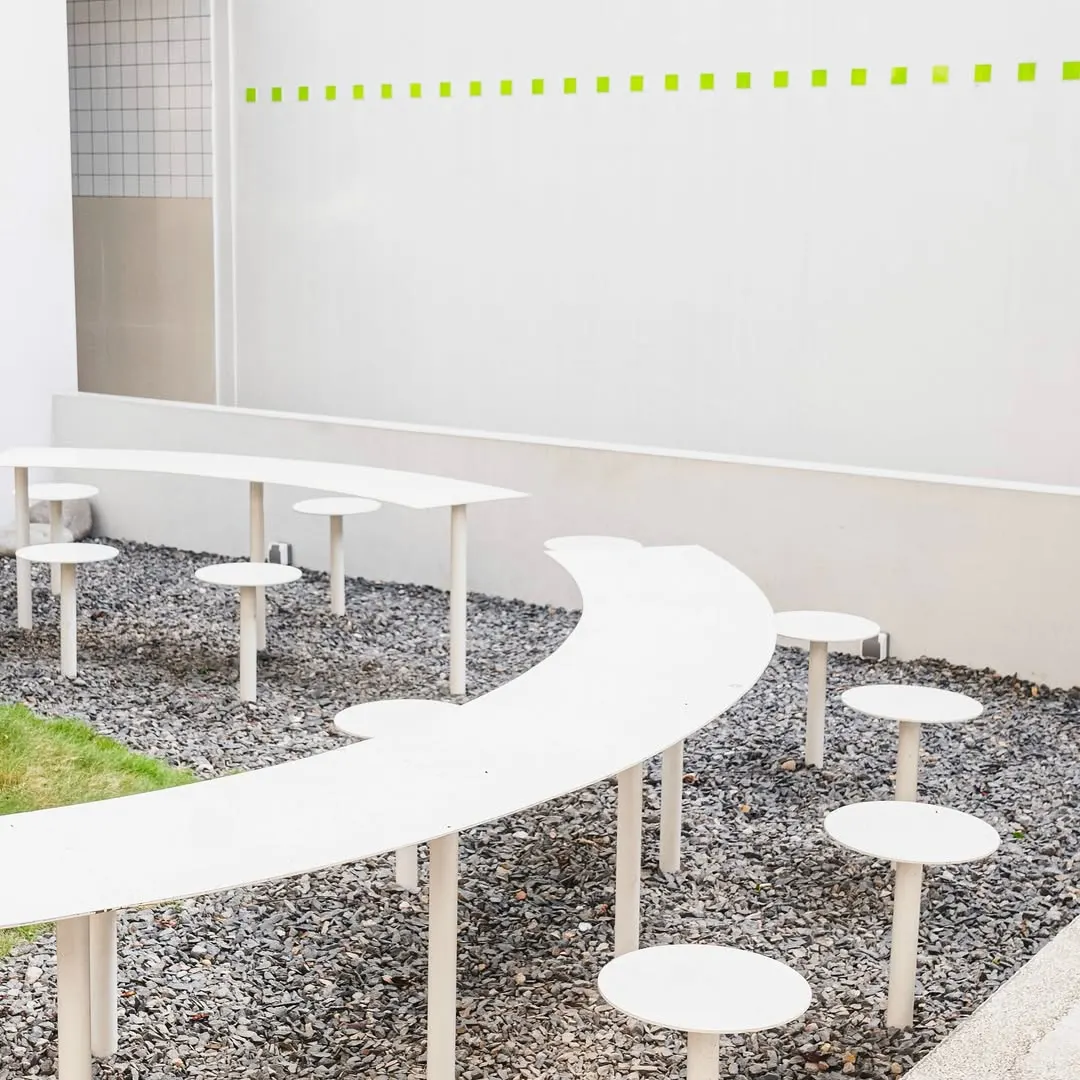
Kopi Tembalang unfolds like a place you don’t rush through. People arrive with different intentions. Some come to talk, others to work, others simply to sit and spend time. The space quietly makes room for all of them. There is no single way to occupy it. A series of indoor rooms, shaded edges, and open courtyards overlap and connect, allowing conversation, focus, and rest to happen side by side. The café opens itself to the sky and surrounding air, creating moments where working drifts into chatting, and chatting lingers into doing nothing in particular.
What holds these moments together is a shared sense of pause. Semi-outdoor thresholds become informal meeting points, where light, breeze, and sound soften the boundary between inside and outside. Within this everyday flow, the mushola is placed close and accessible, forming a quiet intersection between daily activity and spiritual obligation. Designed to be comfortable and generous in capacity, it offers a calm counterpoint to the social energy of the café. Prayer becomes part of the daily rhythm, a brief withdrawal into stillness before returning to conversation, work, and movement once again.